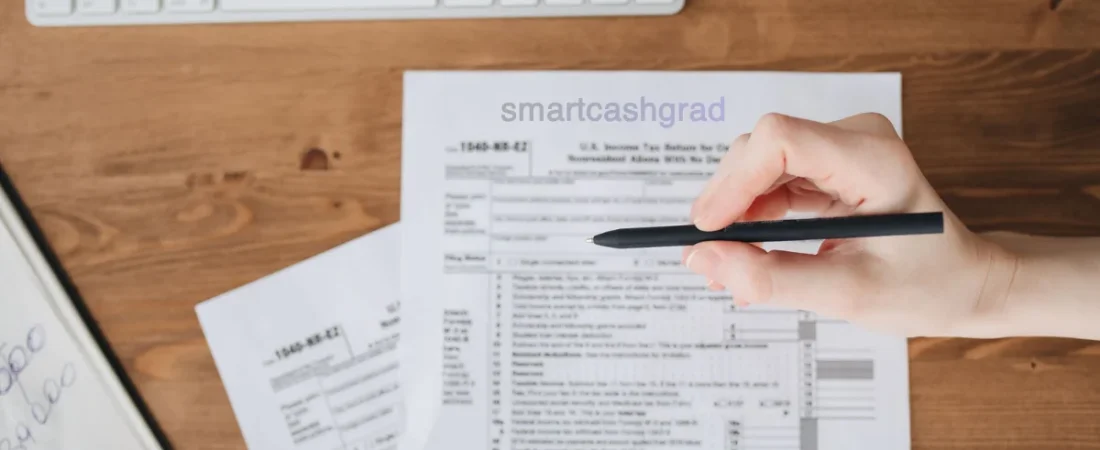
Filing Taxes for College Students with a Part-Time Job: The Ultimate Guide
It is mid-January, and you open your mailbox or student portal only to find a strange document labeled "Form W-2" or "Form 1099." Suddenly, reality hits you. That part-time job you took at the campus bookstore, or those weekend hours you spent delivering food to pay for gas and dorm snacks, means you are officially part of the American tax system. Cue the immediate panic.
Honestly, tax season can feel terrifying when you are already dealing with midterms, tuition bills, and a tight student budget. You might be asking yourself: Do I even make enough money to care about this? Will filing my own taxes accidentally mess up my parents' financial plans?
Here's the thing: filing taxes for college students with a part-time job does not have to be a nightmare. Look, it is actually a massive opportunity to put some hard-earned money back into your pocket. Let's break down the rules for this year so you and your parents can navigate tax season completely stress-free.
The Golden Number: How Much Income Triggers a Mandatory Tax Return?
The first big question you need to clear up is whether you are legally required to file a tax return at all. The IRS bases this decision on your total gross income and your filing status.
For a dependent student working a traditional part-time W-2 job, the mandatory filing threshold matches the standard deduction. For the 2026 tax year, the standard deduction for single filers is $16,100. If your earned income stays below this baseline, the federal government does not legally force you to file an income tax return. However, if your earnings cross that specific line, hitting submit on a tax return becomes a legal requirement.
But there's a catch. Even if your earnings fall well short of that golden number, skipping your tax return completely could be a huge financial mistake. We will explain exactly why in a moment, but first, we need to smash a massive tax myth that ruins family budgets every year.
The "Dependent Status" Myth: Filing When Your Parents Claim You
The tricky part of student finance is the relationship between your tax return and your parents' tax return. A lot of families think it's an either-or situation—either the parents claim the student as a dependent, or the student files their own taxes.
That is completely false. You can absolutely file your own tax return to report your part-time income while still remaining a dependent on your parents' taxes. When you fill out your tax paperwork, you simply check a tiny box that says, "Someone else can claim me as a dependent." It is that simple.
To qualify as a "qualifying child dependent" in the eyes of the IRS, you just need to meet a few basic criteria:
- You must be under the age of 24.
- You must be enrolled as a full-time student for at least five months out of the calendar year.
- You must live with your parents for more than half the year (temporary absences for living in college dorms or student housing still count as living at home).
- You must not provide more than half of your own financial support (this includes housing, food, and tuition costs).
The Hidden Trap: W-2 Campus Jobs vs. 1099 Side Hustles
Not all student income is treated equally by the IRS. The type of part-time work you do completely changes the legal rules of the game. If you work a traditional job where you receive a regular paycheck, you are a W-2 employee. If you run a modern side hustle like delivering apps, driving rideshares, freelancing online, or monetizing content, you are an independent contractor.
The filing threshold for independent contractors is shockingly low. While traditional workers can earn thousands safely without a mandatory filing, self-employed individuals must file a return if their net earnings hit a mere $400. This is because of self-employment taxes, which cover Social Security and Medicare payments.
| Income Type | Primary Tax Form | Mandatory Filing Threshold | Tax Withholding Reality |
|---|---|---|---|
| Traditional Part-Time Job (Campus office, retail, dining hall) | Form W-2 | $16,100 | Taxes are automatically deducted from each paycheck. |
| Gig Economy / Side Hustles (Food delivery, freelancing, tutoring) | Form 1099-NEC / 1099-K | $400 | No taxes withheld. You must calculate and pay your own self-employment tax. |
Why You Should File a Return Even If You Make Very Little Money
Let's say you worked a few hours a week at the campus recreation center and made a total of $4,500 over the entire year. Since $4,500 is way below the mandatory threshold for a W-2 worker, you might want to celebrate and skip the tax paperwork entirely.
But stop and look closely at your very last pay stub. See that line labeled "Federal Income Tax Withheld"? Because of standard payroll settings, your employer likely took a small percentage of your cash out of every single check and sent it directly to the government.
The Math in Action: If your university employer withheld $300 in federal income taxes over the course of the year, that money belongs to you. Because your total income is below the standard deduction, your actual income tax liability is zero. But if you never file a tax return, the IRS will simply keep your $300. When you file a basic return, the government sends you a 100% tax refund check.
Additionally, filing your taxes unlocks critical higher education benefits. Your school will provide a document called Form 1098-T, which tracks how much you spent on tuition and required course materials. This form is the key to unlocking the American Opportunity Tax Credit (AOTC), which can give your family up to $2,500 per eligible student back at tax time.
Your Student Tax Prep Checklist
Ready to tackle your taxes and claim what you are owed? Do not sit down at your computer until you have gathered all your essential documents. Having everything in one place turns a frustrating evening into a quick, twenty-minute task.
- Your Income Statements: Gather every W-2 and 1099 form issued by your employers. Companies are legally required to send these out by late January.
- Form 1098-T: Log into your college student portal and download your tuition statement.
- Your Financial Records: Keep track of bank statements showing regular student expenses, or receipts for required textbooks and school supplies.
- Direct Deposit Information: Grab your checkbook or banking app to find your routing and account numbers so your tax refund arrives as quickly as possible.
The best news of all? Because you are a student making a modest income, you shouldn't spend a single dime on expensive accounting software. You can take advantage of the IRS Free File program, which gives you access to high-quality tax preparation software completely free of charge.
Frequently Asked Questions (FAQ)
Can a college student file taxes with no income?
You can, but there is rarely a legal or financial reason to do so unless you need to claim a fully refundable education credit or establish a tax history for specific financial aid situations. If you earned zero dollars and had no taxes withheld, your tax liability and refund are both zero.
Is a full-time college student completely tax-exempt?
No. The IRS does not hand out exemptions just for being a student. Whether you are in school full-time or not working at all, you are subject to the exact same income tax rules as every other citizen. Your tax liability depends entirely on how much money you earn and how you earn it.
What happens if my parents claim me but I file as independent by mistake?
This is a major headache that flags both tax returns for review. If you file first and claim yourself as an independent, the IRS computer system will automatically reject your parents' tax return when they try to e-file. To fix it, you will have to file an amended tax return (Form 1040-X) to fix your dependency box, and your parents will be forced to submit their taxes via regular mail, delaying their refund for months.
Take Control of Tax Season
Dealing with taxes might feel like a daunting milestone of adulthood, but it is completely manageable once you know the numbers. Check your student inbox for your 1098-T, keep your paystubs organized, and sit down with your parents to coordinate your filing strategy. Taking charge of your financial file today ensures you never leave your hard-earned cash sitting in the government's hands.