
Bypassing routine compliance monitoring checkpoints while executing high-volume independent digital service trades often exposes proactive college micro-enterprises to catastrophic regulatory bottlenecks. Mainstream corporate clients frequently misplace vital corporate documentation streams, leaving student independent contractors stranded without formal verification records as federal filing deadlines lock into place. Relying on negligent third-party accounting departments to issue mandatory revenue declarations introduces structural delays that quietly inflate personal liability exposures. By entirely abandoning passive reporting strategies and executing an unreceived tax documentation protocol, strategic student earners successfully solidify their gross margin protection parameters. This precise structural analysis details how reporting hard independent revenues without standard documentation backups preserves your operational field momentum while reinforcing absolute compliance across your active trade accounts.
1. Reporting Raw Freelance Revenue in the Absence of Official IRS Forms
Encountering an accounting oversight where a commercial client neglects to distribute your mandatory income declarations can freeze your compliance momentum instantly. Many student independent contractors falsely believe that if gross earnings remain undocumented by an official corporate entity, the associated liabilities disappear from the federal monitoring perimeter. However, relying on third-party administrative compliance to initiate your quarterly reporting parameters introduces catastrophic regulatory audit exposures. Taking command of your unrecorded gross receipts functions as a robust defensive shield against late-season penalty adjustments, ensuring your independent enterprise retains absolute structural liquidity.
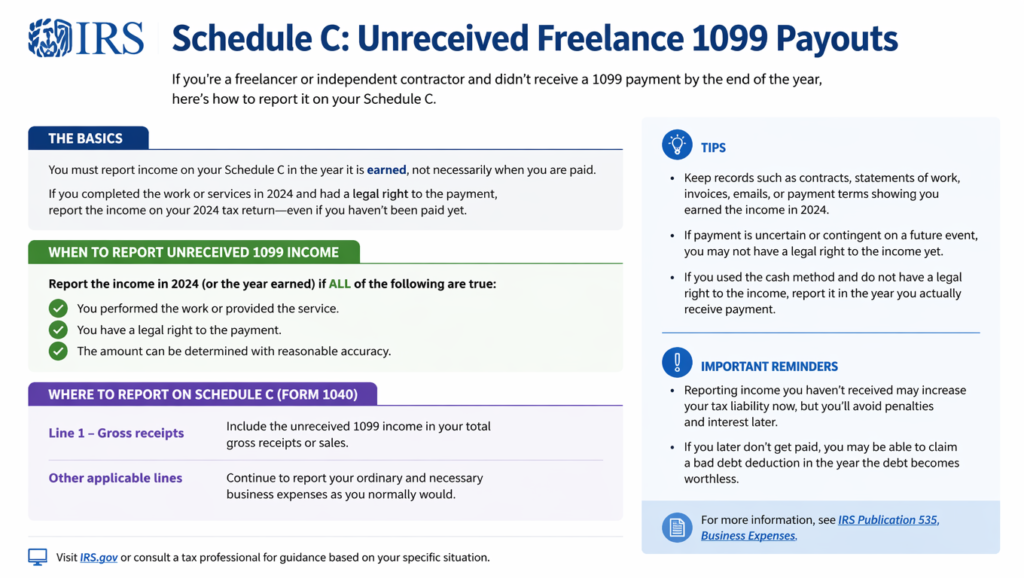
To systematically insulate your freelance business from systemic enforcement audits, you must document every dollar earned through direct ledger auditing. Centralized digital platform notifications or raw bank account deposit stamps serve as unalterable data streams to calculate gross self-employment revenue fields. Transitioning your tracking into proactive manual accounting schedules allows you to input total gross earnings onto your Schedule C form directly, neutralizing corporate documentation deficiencies at the absolute core.
⚡ FAST-EXECUTION CHECKLIST:
- Aggregate Transaction Records: Cross-reference all independent mobile deposits, digital peer payment invoices, and bank statements to compute your exact gross annual earnings from the missing vendor.
- Establish Private Documentation: File a dedicated secure physical folder containing copy prints of all completed client project delivery notes and timestamped payment notifications.
- Execute Income Input: Declare the calculated gross cash amount directly under Part I, Line 1 of your IRS Schedule C return, bypassing any missing corporate paperwork obstacles.
2. The Compliance Framework for Declaring Earnings vs. Waiting for Corporate Documentation
Traditional accounting strategies fail independent student traders because they overlook the structural processing gaps inherent in external corporate payroll structures. Protecting your micro-enterprise liquidity requires a ruthless, transparent breakdown of how your regulatory standing functions under different filing execution timelines.
To give you an uncompromising view of your defensive security options, this strict HTML matrix contrasts the stability of proactive gross receipt declaration against the critical audit hazards of delaying your federal return while waiting for a client to issue missing paperwork:
⚡ FAST-EXECUTION CHECKLIST:
- Isolate Platform Costs: Total all software tracking deductions and hidden transaction costs across your client messaging history to isolate net income fields.
- Extract Transaction Records: Download all digital statement records from your payment accounts to prove the absolute value of received independent transfers.
- Verify Physical Baselines: Entry the completed asset figures into your hand-inked ledger book to anchor your regulatory defensive compliance baseline.
3. Solidifying Income Verifications via Physical Ledger Milestones
Sustaining an audit-proof independent freelance enterprise requires countering the continuous institutional pressure to clear unverified tax fields through automated electronic filing platforms. Mainstream software services purposefully design automated estimations to minimize the immediate emotional impact of administrative documentation gaps, leading directly to invisible deduction denials during future regulatory system audits. To break this dependency cycle, you must document your immutable revenue balances visually by updating a hand-inked daily milestone ledger card kept inside your primary secure storage zone. Watching your real-world independent earnings physically stack up establishes an authentic foundation of protection that digital dashboards can never simulate.
⚡ FAST-EXECUTION CHECKLIST:
- Create Your Milestone Card: Paste a thick index log sheet directly onto the inner lining of your unalterable physical expense verification file.
- Log Every Contribution: Use a permanent dark marker to record your unrecorded net cash balances on the sheet every Saturday night.
- Perform Full Asset Counts: Complete a comprehensive physical deposit validation check on the final calendar day of every single month without exception.
4. Frequently Asked Questions Regarding Missing 1099-NEC Documents
Am I legally required to report freelance earnings if the client fails to send an official 1099-NEC form?
Yes. Federal internal revenue mandates dictate that self-employed individuals must declare all independent trade income regardless of whether a corporate entity distributes formal tax documentation or forgets to log your payouts.
What concrete proof should I provide if the IRS reviews my self-declared gross business receipts?
To lock in absolute regulatory defense, you must maintain transparent manual documentation files. This includes preserving clear digital communication transcripts confirming contract fulfillments, saving matched mobile bank deposit screenshots, or updating physical offline tracking books inside your personal parameter.
⚠️ Regulatory Compliance Disclaimer for the Active Fiscal Framework:
The strategic accounting protocols, manual income tracking structures, and compliance frameworks detailed in this breakdown are compiled strictly for foundational educational and informational utilities. This content does not constitute certified public accountant (CPA) counsel, formal legal guidance, or official tax advisory services. Legislative mandates and filing audit parameters remain subject to sudden adjustments. Always consult a qualified tax professional or licensed accountant before executing independent filing schedules or inputting gross revenue fields.